Cabernet Wasn't Wrong — But Nero d'Avola Was Always Right
If you were drinking wine in the 90s and early 2000s, it seemed like Cabernet Sauvignon was all anybody wanted. Left-bank Bordeaux was the gold standard, Napa Valley followed close behind, and everybody else was scrambling to cash in. Globalization wasn’t just cheap TVs and fast fashion — it also drove a monoculture of taste in the wine world. The market rewarded brands growing familiar varieties, even in places with unique indigenous varieties, unique traditions and centuries of local knowledge. The name of the game was get on board or miss out; If you weren't growing the so-called international varieties, you weren't part of the conversation.
The flaw was built in from the beginning. Fads come and go, and slowly people were reminded that there was a whole world of wine beyond Cabernet (Just look at the effect the movie Sideways had on Oregon). Our approach has always been to look for people who were zagging when the rest of the world was zigging — those who were committed to something with deeper roots and bigger meaning than whatever trend was peaking. The truth is, you can't make great wine over decades by ripping out your vineyards every time the market shifts. Those old vines with deep roots aren't just a metaphor. They are proof of a commitment to the land and a tradition, and they produce more interesting, more complex wines as a result.
Even Sicily, with millennia of winemaking tradition, was not immune. Cabernet Sauvignon was planted all over the island, and the intention was understandable — get a foot in the door with something familiar that people could pronounce. Sure, Cabernet can produce interesting wines, but over the decades producers came back to the idea that there was something far more adapted, appropriate and interesting already there.
Here is where it gets interesting. Blindly following tradition has its own pitfalls — every tradition was at one point an innovation. The better question is: what here is genuinely good, and what could make it even better?
Cantine Pupillo never fully strayed from their roots. Even as Carmela's grandfather embraced Cabernet, the Nero d'Avola vines remained, maturing on the most suited parcels, the knowledge never fading. And along the way, they added to their repertoire without losing themselves. Cabernet wasn't wrong — but Nero d'Avola was always right.
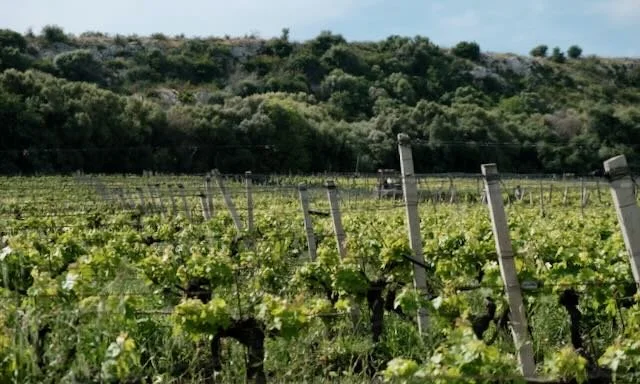
All of this swirled in my head when I sat down to taste with Carmela at the estate this past May. She has fully embraced her role as steward of this remarkable place — she still makes a traditional passito, even though it means sacrificing a lot of those grapes to the birds. But she has also managed to reconcile tradition with new possibilities. Her Nero-Cabernet blend demonstrates that she is not ideologically rigid. Pupillo absorbed the international influence on their own terms, using it to add structure and complexity without losing their identity.
Today's offer is the two sides of that coin — a pure Nero d'Avola, what Sicily always was, and a blend that shows how Cantine Pupillo can innovate without losing itself in the process. Sicilian wine, on its own terms.
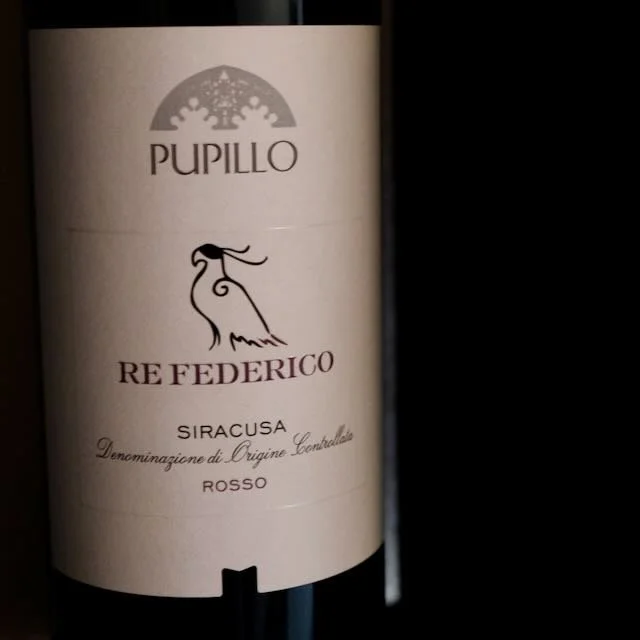
‘Re Federico’
Nero d’Avola Siracusa DOC 2023
Named for Emperor Frederick II, whose summer estate is now home to the winery. This is pure Nero d’Avola, concentrated and aromatic, yet somehow light on its feet. The nose is a complex array of black olive, black cherry and aromatic herbs — almost like a Chinato — before the palate opens up with quinine, bergamot and a pleasant dusty tannin that gives it a beautifully refined texture. A chameleon of a red wine, that will ameliorate any meal, from charcuterie and lighter proteins, to richer roasts and grilled meats.
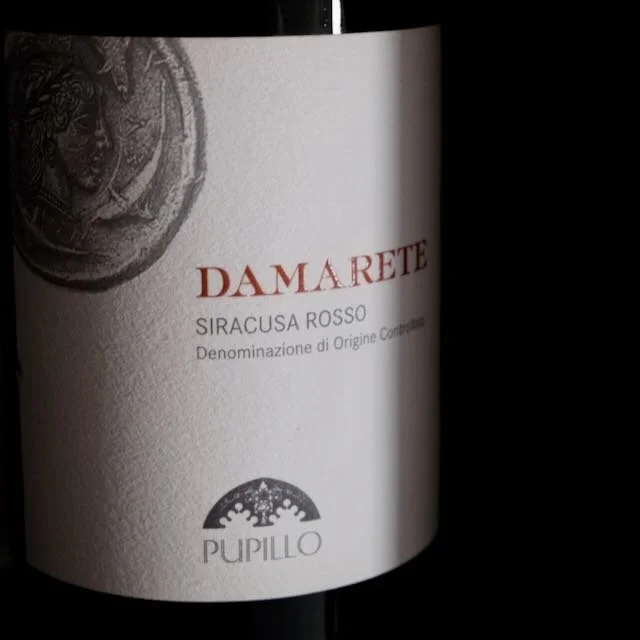
‘Damarete’
Siracusa Rosso DOC 2023
Here is the other side of the coin — literally — with the label displaying a Demaréteion, a coin bearing the image the 5th century Queen of Syracuse, Damarete. A fitting name for a wine that carries both authority and elegance. This is Nero d'Avola blended with 20% Cabernet Sauvignon, and the two varieties find a genuine balance: succulent red fruit and that characteristic Sicilian aromatic lift from the Nero, with the Cabernet adding a firm tannin backbone and deeper structure. Notes of black tea and menthol on the finish, with a salty mineral edge. Confident and complete.
————————————
I wish we could all head over to this island, and you could see, and taste this incredible place for yourself — a few you can, with Cur Non Travel — but in the meantime, grabbing a few of these bottles is a worthy and pleasurable way of seeing why Sicily is one of the most interesting wine regions right now. Thousands of years of history, yet still evolving, and these two bottles are the proof.