No Occasion Necessary
After a couple of weeks in Italy hiking through vineyards, cellar visits and long lunches, I've settled back into my routine at home — now missing more than a few things I encountered along the way. Travel has a way of shaking you loose from your habits, showing you different ways of living and seeing the world, and sending you home with a slightly altered perspective.
Here's one that keeps me coming back to this work.
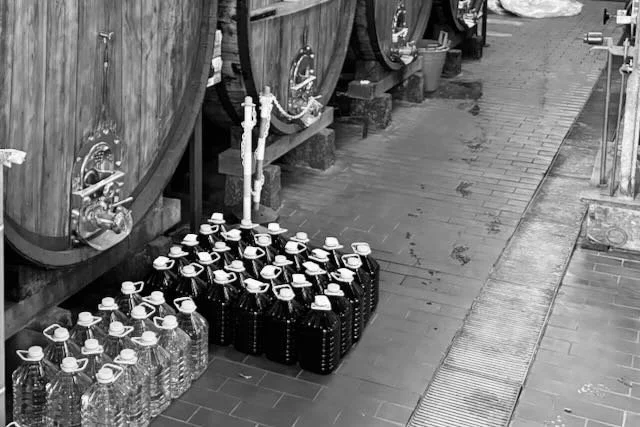
I was visiting the cellars of a well-known winery on the slopes of Mt. Etna — a place celebrated for its elegant still wines and exceptional spumante — when I noticed rows of three-liter plastic bottles lined up along the wall, filled with wine, waiting to be picked up by locals. I must have raised an eyebrow, because my guide smiled and explained that this is still very much a part of how many Italian wineries operate. The neighbors show up with their plastic jugs, fill them up, and head home for dinner. It's not a novelty or a nostalgia play — it's part of what keeps the community going. Wine to drink, without any fuss.
Here was one of Etna's finest producers, making wines that turn heads, and right alongside that, quietly filling plastic bottles for the family down the road who just needs something good to drink with their pasta. No ceremony, no occasion, no sommelier required.
For most of wine’s history, that's exactly how it has been — part of the meal, like the bread or the olive oil. Something to nourish, to accompany, to bring a little pleasure to the table. The idea of wine as something rarefied, requiring expertise and reverence, is a relatively recent invention — and one that, I'd argue, does wine a disservice.
Which brings me to Rivaner.
As I do most times I sit down to write, I grabbed my Oxford Companion to Wine to check a few facts about today’s offer. The entry for Rivaner sent me to Müller-Thurgau, and a fairly withering assessment of the variety — dismissive in the way that only conventional wine authority can be. Dan and I have spent our careers in wine happily ignoring this kind of conventional wisdom — looking for interesting, honest bottles around the edges, with the goal of putting something good on the table tonight, and empty bottles in the recycling bin.
So here are some actually useful facts: Rivaner, a crossing of Riesling and the early-ripening Madeleine Royale, is one of the most widely planted and beloved varieties across northern Europe. It shows off enticing aromatics paired with a silky rich texture and vibrant acidity, and it is right at home along the Moselle in Luxembourg, where Nicolas Schmit and his family have been growing it for generations.
In Luxembourg the locals drink nearly everything the country produces within their own borders. They may not stop by with plastic jugs, but like that Etna winery, the locals know exactly where their wine comes from, and Nicolas Schmit know exactly who buys his wine. He makes wines that people can reach for every day without a second thought, and the Luxembourgers oblige him by doing exactly that. We consider ourselves lucky that he lets a few cases travel a little further.
No, we don't have three-liter bottles for you to fill up at the warehouse — but this one is arriving in the warehouse shortly, and at $19 a bottle ($17 when you grab it by the case) it's as close to the spirit of that Etna cellar as we can recreate on this side of the Atlantic. Open one any night of the week. No occasion necessary.
Maison Viticole Schmit-Fohl Rivaner Côtes de Ahn 2024
Pale and bright in the glass, with an immediately engaging nose of stone fruit, jasmine and peach. The palate is layered with pear and citrus, and — as with everything Nicolas makes — a clean current of acidity keeps it upright, refreshing, and remarkably easy to reach for again. This is precisely the kind of wine the Oxford Companion crowd tends to overlook, and precisely the kind of wine that disappears from the table before you've noticed. Pair it with creamy pasta, pork chops, a bowl of Vietnamese Bún, or a garlicky Ceasar salad — or just open it on a Tuesday because it's there.