EXPLORING A NEW SOURCE FORMOUTHWATERING CHENIN BLANC
After a week of scouting for new wineries this past July, Dan and I had already discovered plenty of new wines that we were excited about, and we felt like we had done our duty to put together a full roster to offer to the Cru faithful. There was just one last place we wanted to check out, so, with a train to catch that evening, we headed up to a tiny and obscure appellation north of Tours.
Jasnières isn't exactly a household name, even among wine enthusiasts. Compared to its famous neighbors like Vouvray, Saumur, or Montlouis, it's barely a speck on the map, with just 65 hectares of vines in the entire appellation. But we knew there was Chenin Blanc to be had, so an investigation was in order.
In 2012 winemaker Claire Lelais assumed responsibility for the family winery, continuing a family tradition that goes back to the 1960s. When her husband Guillaume joined her in 2020 they became stewards of 14 ha of organically farmed vineyards in Jasnières, a holding that, remarkably, makes them one of the appellation's largest producers.
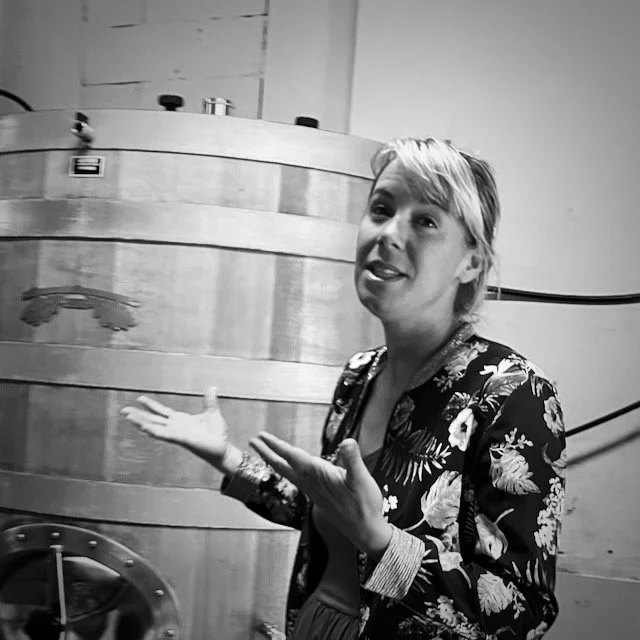
The winery sits beside the family home, a handsome if unremarkable house along a country road, with a modest courtyard leading to the winery and a series of caves, where we tasted.
From the first sip, I could see Dan’s eyes popping wide open (I’m sure mine were too). Wow these were good! Claire led us through the tasting, and then, with her 5-year-old son tagging along, took us on a walk throughout the largest of the caves and our mouths dropped - it was one of the most remarkable cellars we had ever seen.
Throughout much of the Loire valley, you can find caves carved into the tuffeau limestone. Most of these are modest—some were homes, others for winemaking or root cellars. In Jasnières, there were often clusters of these small caves, each owned by a different family. Among them, they would host communal tastings and festivals, store their wine, and of course, do their winemaking.
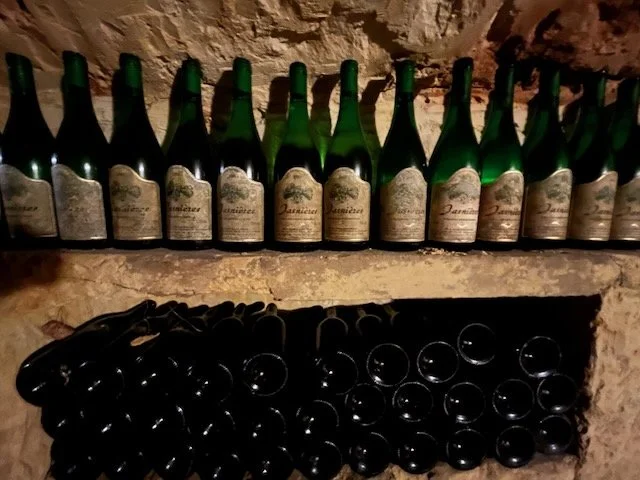
What Claire showed us was actually part of a former quarry, where the fine white stone was extracted to build the chateaux and cathedrals of the surrounding area. But these had been transformed over the centuries into the “Caves of Baccus” where the locals would come to have drinking parties in the depths of the tunnels. The walls were decorated with graffiti from partygoers, and niches for storage were carved directly into the stone.
While the Bacchanals are now a thing of the past, and the caves are no longer used for winemaking or storage, the niches still hold vintages of Lelais family wine going back 7 decades. I think we all need to pay a visit here together sometime, but until then, we've brought a slice of that magic home to you.
About a week following our visit with Claire, I got a photo from Dan that showed a bottle of her Domaine Lelais Tradition on his dinner table with bowl of steamed mussels. The accompanying text simply said-- “Still delicious. Passes the Mrs. Cru test.”
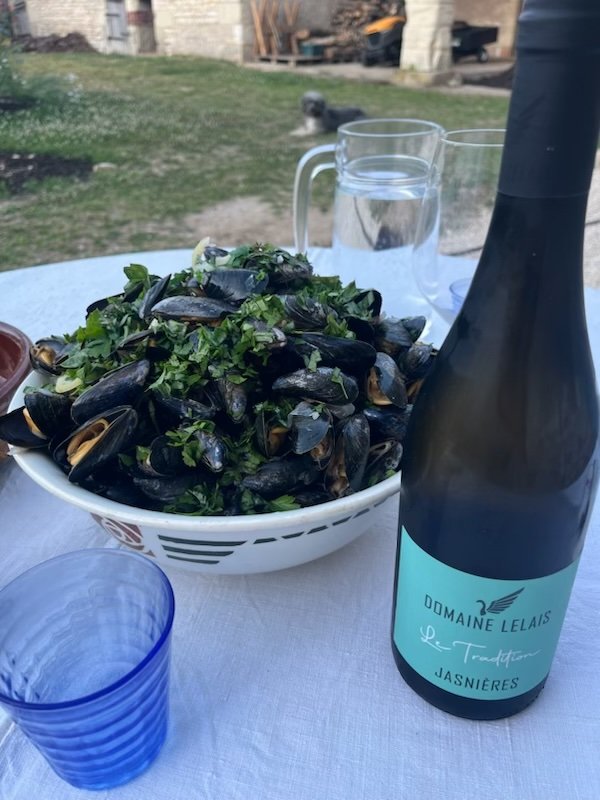
Domaine Lelais
AOC Jasnières "Le Tradition" 2023
AOC Jasnières is always 100% Chenin Blanc, but historically is a cooler appellation, with leaner, higher acid wines compared to Chenin Blanc from Montlouis or Vouvray. However, Jasnières is one of the places that is benefiting from climate change with more consistently warm vintages that still display the tension and vibrancy that flatters Chenin blanc. The Lelais "Tradition" showcases that electric acidity and a bouquet of citrus and floral aromas, followed by white peach and pear on the palate.
We've been searching for a Loire Chenin Blanc just like this one, and if not's a big pile of mussels, you'll be happy with to have this wine your favorite goat cheese, maybe a vegetable lasagne, or even a crispy-skinned roast chicken.