Making Up For Lost Time: Podere Sabbioni
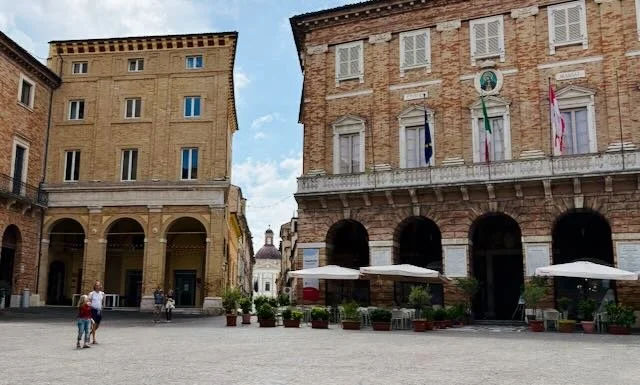
Among my adventures as a college student was a term spent abroad in Macerata, Italy. It's a small city in the Adriatic province of Marche, just remarkable enough to be interesting, but quiet enough not to derail my studies. Sadly, as a student living on a budget, indulgences were rare and modest — I allocated my allowance to the necessities of coffee, pizza and pasta, and what was left over afforded me a cheap bottle of Montepulciano.
I think often about all the little things I learned outside the classroom in Italy — as I take the time to prepare a meal for my family and friends, as I deliberate over the best shape of pasta to use, or patiently await tomatoes to ripen on the vine in my garden. But at the time, wine was only a casual interest. I had ancient architecture, renaissance painters and weekend trips to think about.
A few unforgettable meals among friends changed that — lightbulb moments on a weekend away in Verona or the Amalfi coast that watered the seeds of interest already starting to sprout. A few decades later, here I am, a wine importer. And for years I wondered: what about the good wine in the Marche? What did I miss out on while I was there as a poor college student?
This spring, I made it my mission to discover the gems of this out of the way province, and make up for my student days. Intuitively I know that no matter where you are in Italy, there are winemakers deeply committed to growing expressive, elegant and meaningful wines — not just the bottom shelf bulk wines that helped to sustain a college student.
Last week I shared one of these finds with you — the miraculous wines of Umberto Gagliardi, making some of the finest white wine I've come across in Italy. But what of that humble red Montepulciano? Could I find a wine to redeem my memories of cheap and characterless red?
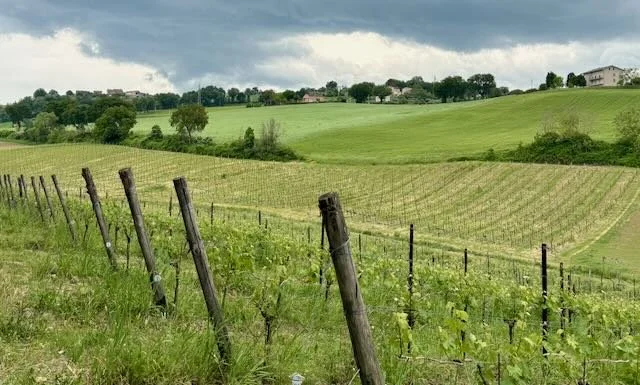
Just outside of Macerata, about an hour east of Matelica, I found Podere Sabbioni. Or rather, I showed up at the address, stared in confusion, drove around the area for another 30 minutes, then called winemaker Massimo Carletti and apologized for my tardiness, asking him to come find me. My confusion was due to the giant grain mill located where I thought a winery was supposed to be. But then Massimo jauntily descended the stairs of the mill's office and guided me down to an unused basement annex — hiding a pocket-sized winery and the beginnings of his passion project.
The real passion project was a few miles down the road: four hectares of vines planted in a natural amphitheater. It's here that Massimo's land ethic plays out fully. He doesn't just farm organically — he is using natural systems to protect and preserve the entire ecosystem. Beehives line the edge of the vineyard, barley and other grains grow between the rows so sheep can graze and fertilize the soil. It is a tapestry of life, and the wine is just one result.
Massimo told me: "We talk about the whole Marche region by talking about our wines."
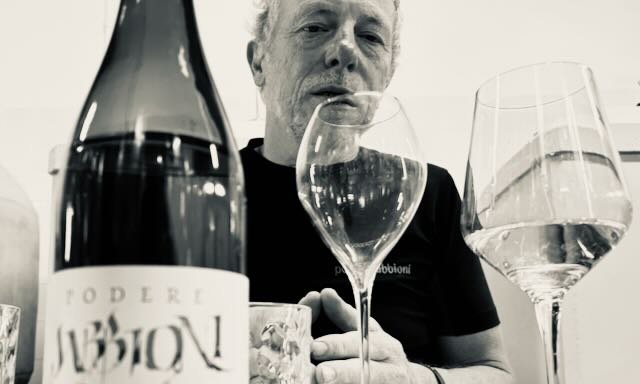
He could just as easily have said the same about the grain mill. Seeing the interconnected thinking at work in the vineyard, it was clear that everything was connected for him — the mill, part of the family business, was another piece of the puzzle that feeds the region, while self-sufficiently powered by an adjacent stream and solar panels. The winery fits into that picture both spiritually and practically, right down to the basement annex.
When we eventually got around to tasting the wines, they were everything I had hoped for, and more, which by that point didn't surprise me. Just as Massimo embodies a holistic and connected vision of the land and the food it produces, his wines are the antithesis of the industrially produced commodity I drank in my twenties — a liquid expression of his home.
Podere Sabbioni
Rosso Piceno DOC 2022
Rosso Piceno is the Marche's signature red appellation, built around Montepulciano — one of Italy's most widely planted red grapes, and one that too few producers treat with genuine care, producing simple red wine short on character, like the ones I drank all those years ago. I’ve been looking around a for a worthy Montepulciano for a while now, but too many I tasted came up short. Massimo has just one hectare of red grapes and treats them with absolute reverence, but even without knowing anything of his story, his Rosso Piceno stands out from the first sniff.
Fermented in a combination of stainless steel and concrete tanks, then aged for 15 months in barrel, with about 15% Sangiovese blended in for structure. Deep, opaque purple in the glass, with aromas of blackberry, plum and black cherry, and a hint of cocoa and spice. Massimo harvests the Montepulciano a little early to preserve acidity and the Sangiovese a little later for more ripe and elegant tannins — the result is reminiscent of a full-bodied Côtes-du-Rhône, with the characteristic brightness of Italian wine. Beautifully balanced, and built to age.
This will flatter nearly any meal — pizza and pasta, yes, but the elegant tannins will hold up to a roast or grilled meats, and the soft fruit plays nicely with a simple plate of cheese and charcuterie.
Tasting Massimo's Rosso Piceno was another lightbulb moment — redemption for all those bad bottles of Montepulciano I drank as a student. If only I had known this was growing in my backyard all those years ago.