Things Fall Apart, Pupillo Puts It Back Together
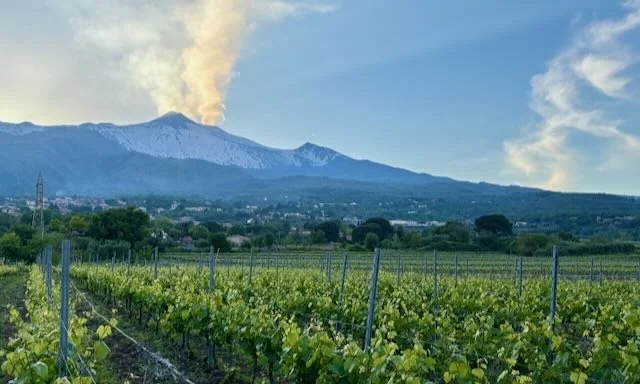
Even before you land in Catania, you can't help but notice Mt. Etna. It dominates the landscape of eastern Sicily, seemingly omnipresent — much like our Mt. Hood, if Mt. Hood had an active plume of smoke rising from it. All around the island are signs of the volcano's impact over the centuries: wholesale destruction and optimistic renewal, the looming threat of disaster alongside the beautiful evidence of regeneration.
Driving south toward Siracusa, as Etna slowly receded in my rear-view mirror, the landscape shifted, but the razing and renewal still showed up everywhere. One of the oldest and most important ports in the Mediterranean, Siracusa is layered with history: a modernist concrete church alongside an ancient Greek amphitheaters, and all of it bustling with locals out for their evening passeggiata, gelato in hand. Everything is falling apart and being put back together, all at once.
The same could be said of the Castello Pupillo, a former summer residence of Emperor Frederick II, built in the 13th century. The palace still stands, along with the farm and vineyards, now a national monument, a hotel, and a working winery — run by Carmela Pupillo, the fourth generation caretaker of this remarkable place.
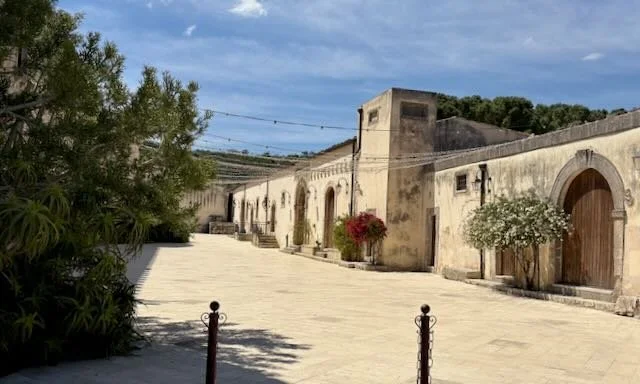
The Pupillo family, one of the old aristocratic families of Sicily, acquired the estate in 1909, and it has been a multi-generational project to revive it ever since. It was Carmela's grandfather Nino who understood that its renewal would come from the vineyards — he was one of the first growers in the province to embrace organic farming, and spearheaded the revival of the Moscato di Siracusa DOC, which was on the verge of obsolescence for lack of producers. Carmela inherited that mission, bringing the 13th century palace, and its vineyards, into the 21st century.
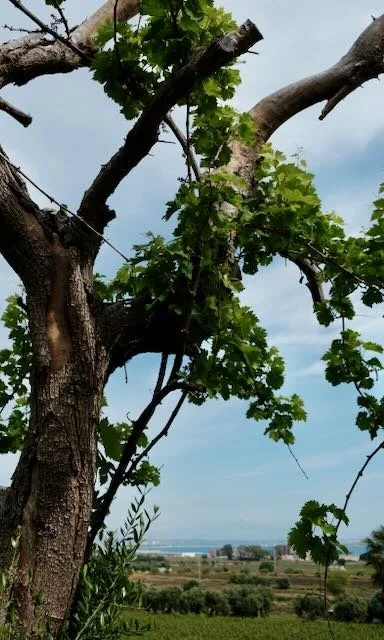
Among the wealth of artifacts that tell the story of this place, is a 300-year-old vine growing at the edge of the property that snakes along the ground before shooting up the trunk of a tree. It has survived droughts, fires, and all the changes of ownership across three centuries. It is this vine that was the source of all the Moscato di Siracusa on the property — the mother vine that helped resurrect what is considered the oldest variety in Italy.
But Carmela’s winemaking is not handcuffed by convention. While the local tradition was based around off-dry and sweet Moscato, she resolutely banked on the potential for dry wines that show off freshness, drinkability and finesse. Likewise, she labors over her Catarratto, a grape more commonly used for cheap bulk wine elsewhere on the island, to make an exquisite white unlike anything else you’ve tasted.
Of all the places I’ve been in the last year, searching for wine, Sicily was without question the most inspiring and rewarding. Each of the wines I tasted thrilled my palate and sparked my imagination with their absolute uniqueness. Even with close to three millennia of history, there has never been a more exciting time to drink Sicilian wine, and Carmela's wines are among those leading the way. These two white wines, her eye-poppingly delicious dry Moscato and otherworldly Catarratto, are headed our way, and both are available on pre-arrival today.
‘Cyane’ Moscato di Siracusa DOC 2025
From cuttings of that 300-year-old mother vine, this is pure, 100% Moscato di Siracusa — a variety that was nearly extinct before the Pupillos brought it back. Dry, yes really dry, and immediately refreshing. A kaleidoscope of flavors from honeysuckle, stone fruit, and citrus finishing with a salty edge that makes it one of the most versatile whites we import. This wine never fails to take me by surprise and delight me all at once.
At ease on the table with seafood, appetizers, pizza, or simply as an inviting glass while you figure out the rest of the evening — there is no bad moment for this wine.
‘Targetta’ Catarratto Sicilia DOC 2025
Catarratto is widely planted in western Sicily, mostly high-yield, low quality production. This parcel near Siracusa is something of a rarity: a single hectare farmed to low yields with just 3,000 bottles produced, of which we have 168! Straw-colored, high-toned and sunny, with tropical fruit — mango, papaya, guava — and a long finish of sea salt and light stone. It picks up where the Moscato leaves off in richness and keeps going, and is one of the most distinctive wines I tasted on my visit.